
Tricia Joy’s paints languid lovelies that catch the eye…

Is it mere listlessness, or are they the carriers of lost stories?

Sometimes, body parts are displaced and disembodied.
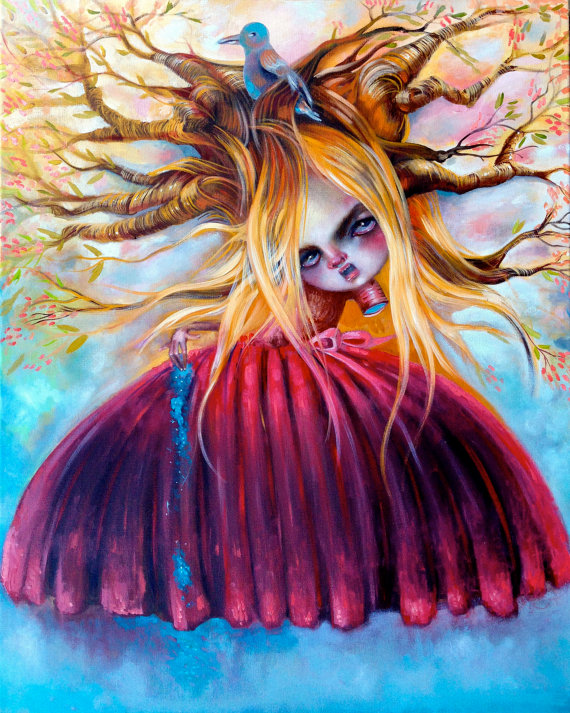

…and strange things grow.

Tricia Joy’s paints languid lovelies that catch the eye…
Is it mere listlessness, or are they the carriers of lost stories?
Sometimes, body parts are displaced and disembodied.
…and strange things grow.
I found this on Pinterest ages ago, but no artists was credited. Anyone recognize it?

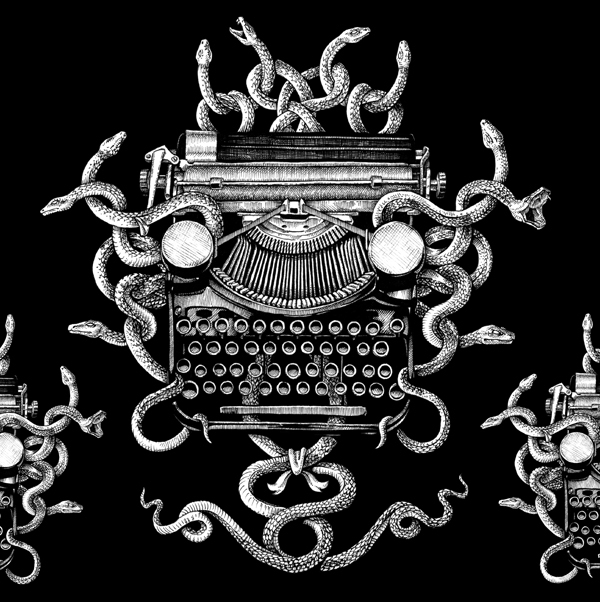
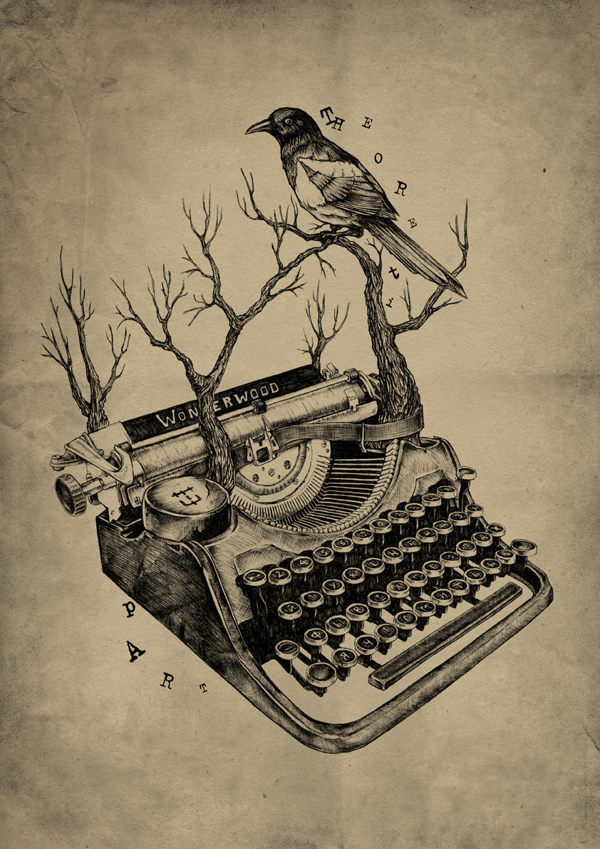
Theoretical Part is a “creative community” of two illustrators from Rostov-on-Don, Russia.

Most of these works are ink on paper, done in luscious detail.

There are a number of beautiful typewriter images in the portfolio (which I love, of course), always teeming with wildlife, creatures and growing plants…
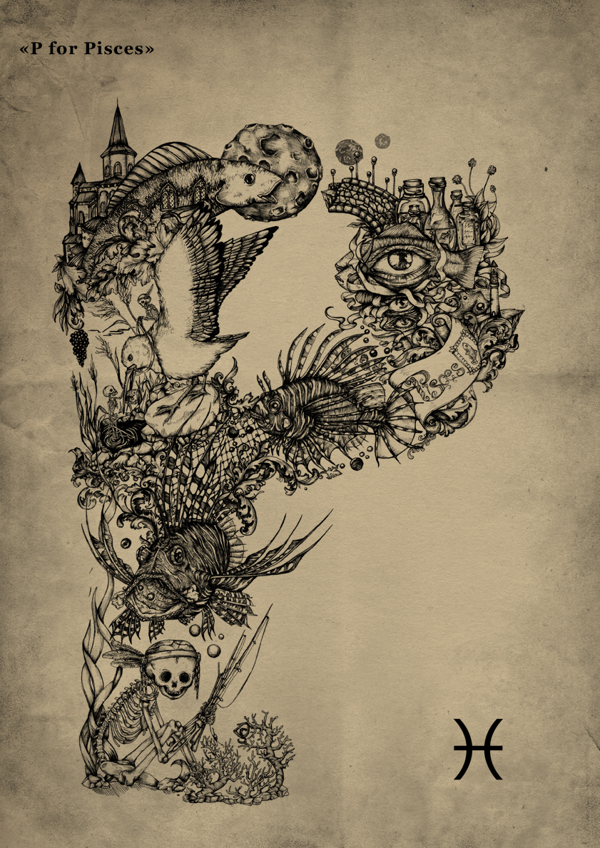
Check out her series of zodiac lettering!
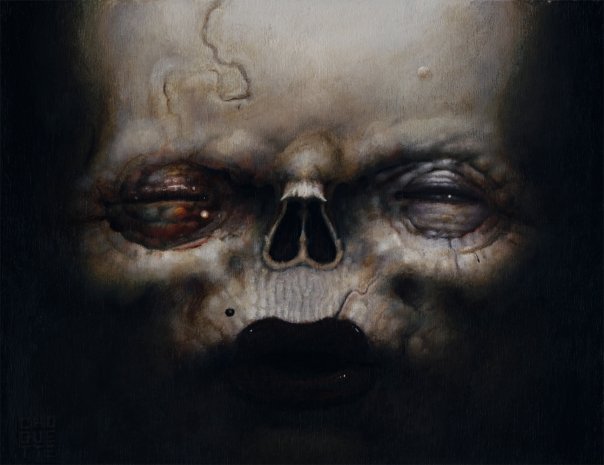
David Choquette very appropriately labels his work “pop grotesque.”
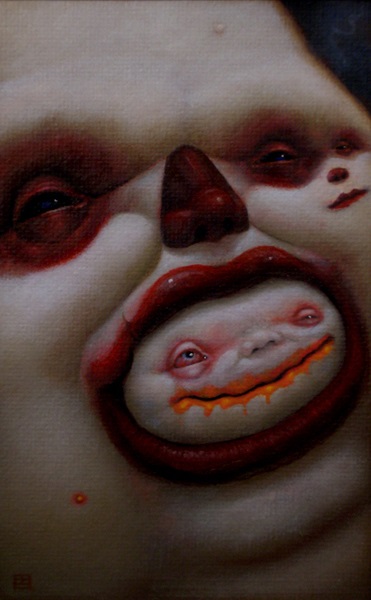
Grotesque is exactly the word that comes to mind when I view his portfolio. But it takes talent to paint subjects that elicit a visceral response.
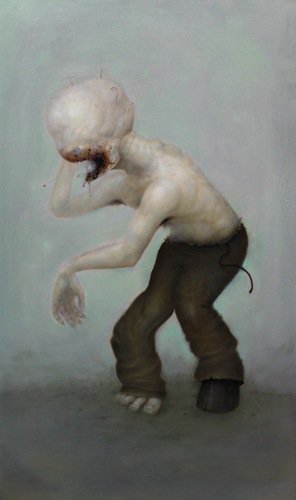
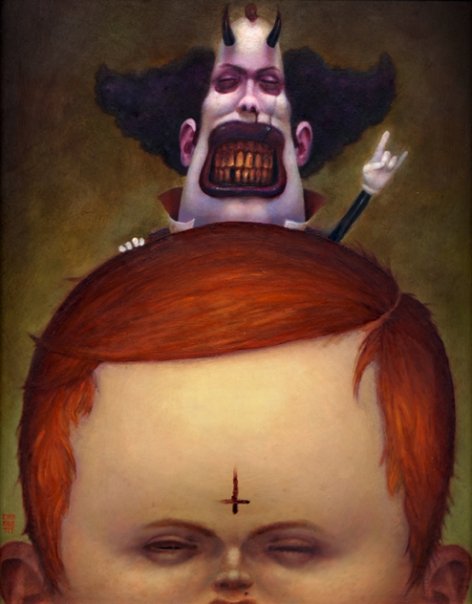
Squinted eyes (is it anguish? Exhaustion?), sickly looking flesh and grungy teeth create the feeling that these creatures are rotting alive.
Here is yet another gorgeous tarot deck, a bit out of my price range, that I find very interesting: The Lost Tarot
The use of skulls and skeletons is lovely, and the soft color scheme is quite unique (click image to enlarge a bit).
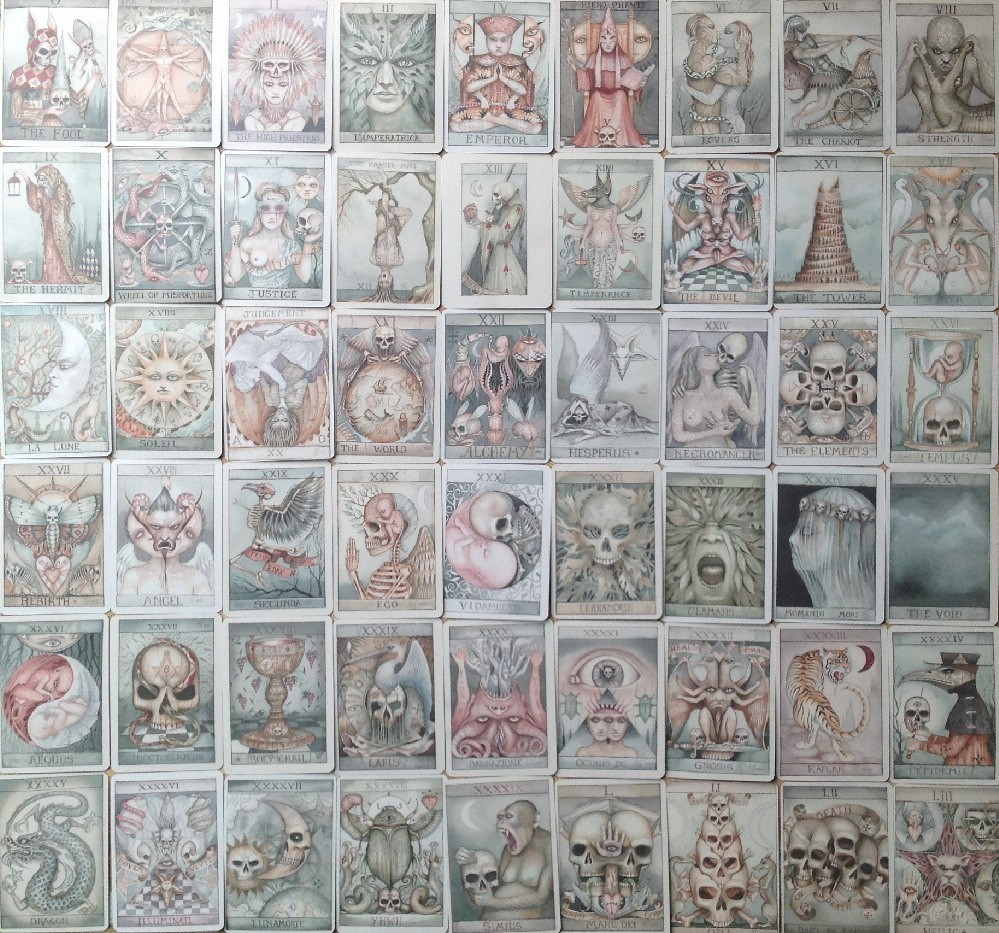
Hopefully one day this deck will be part of my collection!
I also recommend checking out the other categories of art on Dominic Murphy’s site. There are treasures to be found there!

I’m sorry it’s been a bit more around here. I was in the hospital last week, and back again this week (not in for another major surgery, thank goodness). I just got home and I’m spent! But I’ll resume regular posting ASAP.
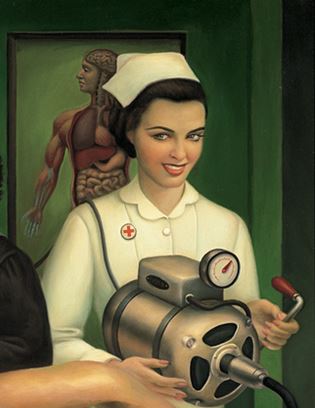
I like getting portfolio links from artists I may not have discovered on my own, such as The H Lazarus.

She sites some of her influences as Neo Pop-Surrealism and Cyberpunk, Saints, mythology and technology…the fragmentation of the spiritual side of men rediscovered in the advent of new technologies.

Some very cool pieces!

In keeping with my resolve to post more of the artist’s own words (when available), I give you Sarah Petruziello’s statement about the work in this gorgeous pencil portfolio.
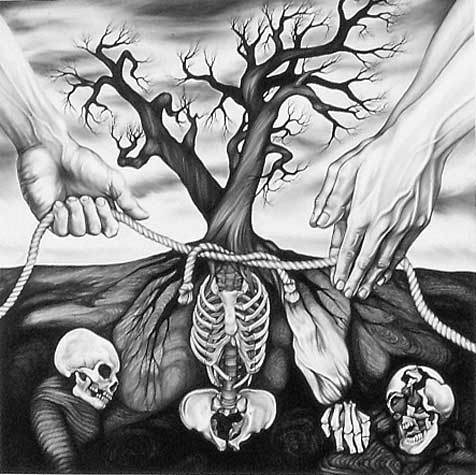
I create large-scale self-portrait drawings using pencil on paper. These drawings are meticulously-rendered, elaborately staged and illustrative works that use dramatic and expressive poses as well as visceral symbolism as a conduit for both personal and universal narratives.
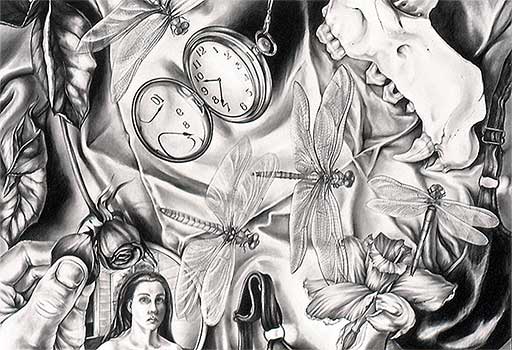
I walk the line between the reality and the artifice of the self-portrait. I do not view self-portraits as mere illustrated recreations of the self; I frequently use my self image as though I were an actor under the affectation of a role. Sometimes I am a stand-in (for the collective of civilization and a participant in the transgressions of humanity), sometimes I am simply playing myself and these works are detachedly recording minute personal stories as though from a journal.

Truthfully, I create my self-portrait drawings out of a compulsion to document and compartmentalize both fleeting thoughts and emerging prescience. Although some of my drawings can be construed as social commentaries, I do not view art as a catalyst for the transformation of society or as having the ability in itself to make social change. Rather I see art as a reflection of society which we can use as a means to identify and delineate our own beliefs and views, our own stories, and personal histories. By using the traditional medium of pencils on paper, I purposefully disengage from technology to find a more fundamental and corporeal means to explore private subjects and thoughts; by the use of the self-portrait, I am seeking a candid and sometimes awkward intimacy with my drawings.

I’m actually heading to the ER this morning, so I’ll keep this post short. Enjoy the wonderful surreal creations of Lee Harvey Roswell.

While Iori Tomita creates beautiful translucent specimens of sea creatures, Brandon Ballengee has chosen to focus on deformed amphibians.
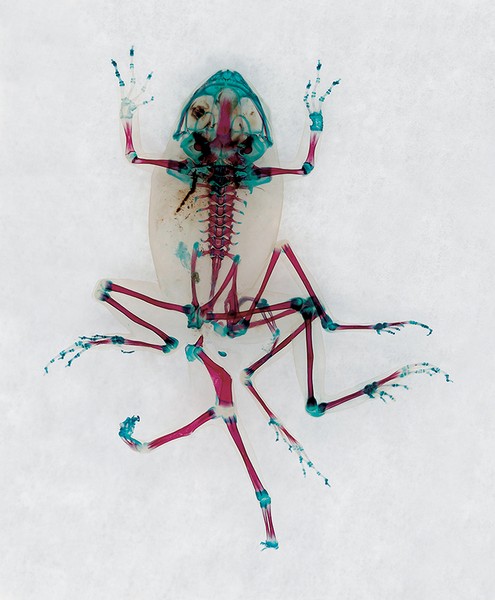
From the artist statement:
Since 1996, my transdisciplinary practice has bridged primary scientific studies with ecological art and engaged environmental stewardship. Underlying my practice is a systemic methodology, which posits art practice as a means of realizing research science, and vice-versa. Inherent to this working method is an impetus for “ecosystem activism” implemented through participatory biology field investigations and laboratory programs that stress public involvement – my attempt at social sculpting. My artworks come from direct experiences with amphibians, birds, fish and insect species found in today’s preternatural ecosystems and those observed in post-natural laboratory settings.
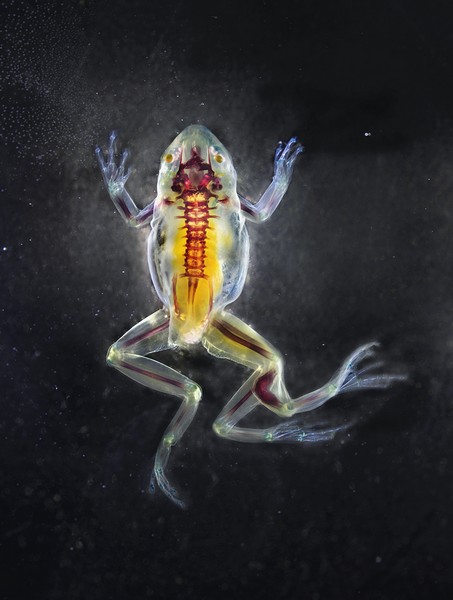
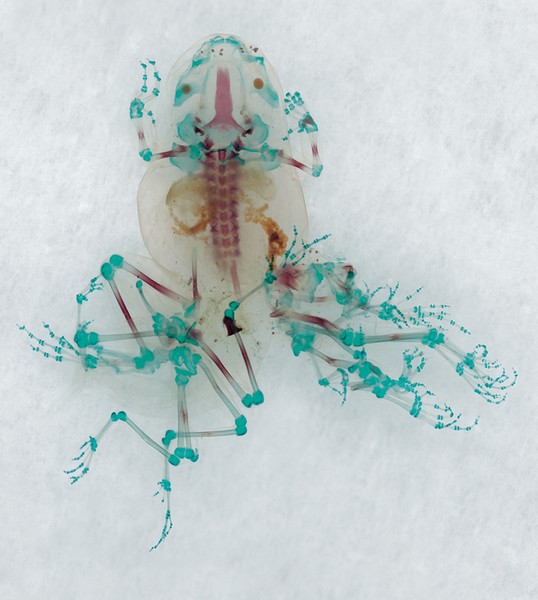
There is evidence that the growing occurrence of amphibian birth defects comes from contaminates in the chemical runoff of man made facilities. I deeply respect Ballengee for using art to evoke awareness and empathy for these creatures.

Now, via an enzymatic process and re-coloring, we can see the beauty of these creatures that tend to be largely ignored by humans.

 SheWalksSoftly