
Decellurization is an absolutely fascinating process in which cells are “discharged” from organs, leaving only the connective tissue.
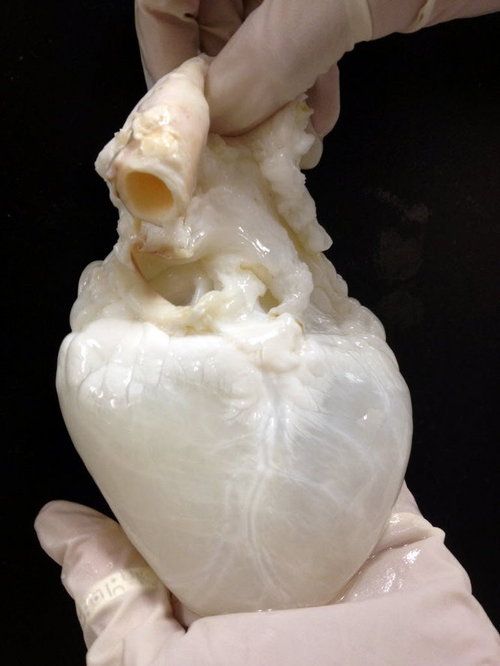
The first step involves the application of a specialized detergent known to be an efficient solubilizer, without affecting the integrity of the protein in the tissue. Then, a recombinant endonuclease is used to degrade nucleic acids. (I had to quote Wiki there because I’m pretty sure there was no other way to get the word “solubilizer” into your day today)

This process has tremendous implications for organ donation and transplants, as it maintains structural function yet greatly reduces the immunological response that causes organs to be rejected. It can be done by pumping the detergent through the organ, or submerging the organ.

Science!
If you are as captivated by this as I am, don’t miss the work of Iori Tomita and Brandon Ballengee.
 SheWalksSoftly
8 responses to “Decellurization”
So strange… they look like Greek statues. Imagine if an old statue toppled over, shattered and these things spread all over the floor!
I also thought they looked like statues, actually!
When I first saw this I nearly blanched. Fascinating, and really neat to see. Almost looks like some sort of plastination process for preserving and studying tissue.
It does! But these organs can report for duty. 🙂
“Yes, but how do they taste?” says a cannibal somewhere.
“Bland,” says the cannibal who answers.
Cool and a bit spooky for some reason. But even cooler because of the retained functionality!
Yes, they are like ghosts that take on new life!