I come across many robots in my online perusals. Here are a few recent highlights.
Artificial Skin Robot:

Researchers at the University of Hertfordshire are working on a robot named Kaspar that perceives tactile sensations in order to help children with autism.
The goal is to make the robot able to respond to different styles of how the children play with Kaspar in order to help the children to develop ‘socially appropriate’ playful interaction (e.g. not too aggressive) when interacting with the robot and other people.
(Honestly, I’m not sure if such a creepy looking robot is the best tool for the socialization of children)
Saya-Sensei Synthetic Substitute Teacher:
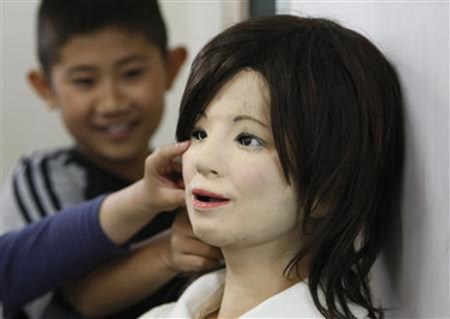
Students in Tokyo were recently “delighted” to come back to school after the holidays and find their teachers replaced with this (terrifying) robot.
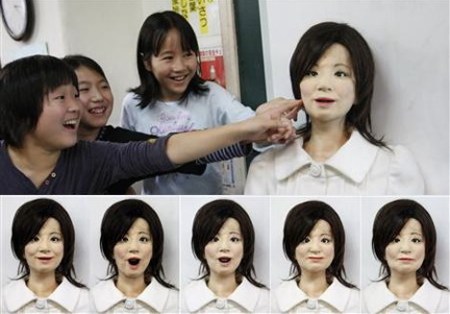
The robot, which can speak multiple languages, uses facial expressions to facilitate communication. With an array of motors in her head that stretch the soft synthetic skin into various positions, Saya can display emotions ranging from happiness and surprise to sadness and anger.
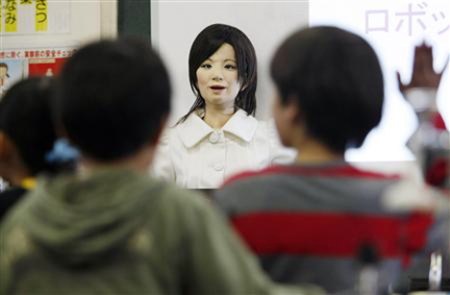
However, Saya needs to work on improving her classroom management skills. At present, she can’t do much more than call out names and shout orders like “Be quiet.” But that does not make her any less popular with the kids.
Kobian:

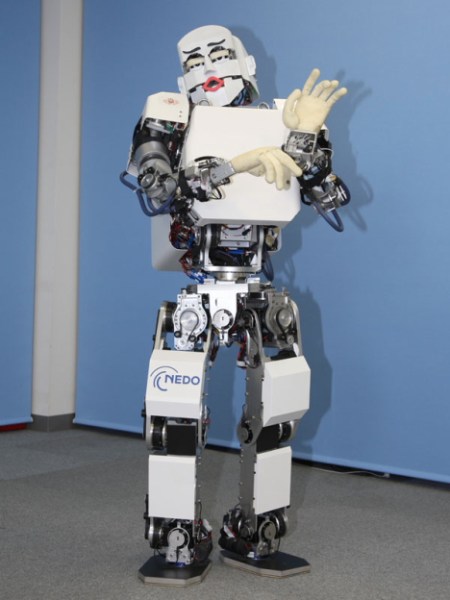
Following the recent trend of “emotional robots,” we have Kobian, the bipedal emotional humanoid machine.
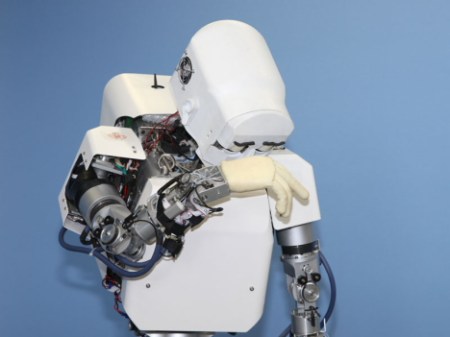
KOBIAN can express seven different feelings, including delight, surprise, sadness and dislike. In addition to assuming different poses to match the mood, the emotional humanoid uses motors in its face to move its lips, eyelids and eyebrows into various positions.
This photo really needs a caption:
To cleanse your palate, I offer you PARO, the therapeutic seal robot.
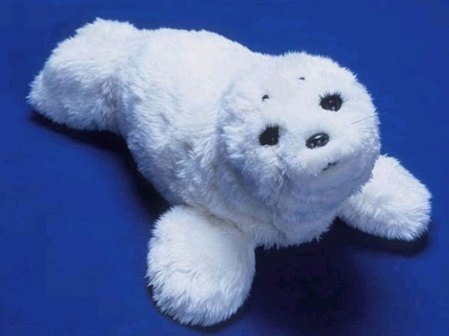
Paro can learn to behave in a way that the user prefers, and to respond to its new name. For example, if you stroke it every time you touch it, Paro will remember your previous action and try to repeat that action to be stroked. If you hit it, Paro remembers its previous action and tries not to do that action.
PARO has been found to reduce patient stress, stimulate interaction between patients and caregivers, improve relaxation and motivation, and help the socialization of patients with each other and their caregivers. It was even proclaimed the World’s Most Therapeutic Robot by the Guiness Book of World Records.
I’ll close out this post with a few awesome Maker Faire bots, photos courtesy of my friend Damon:
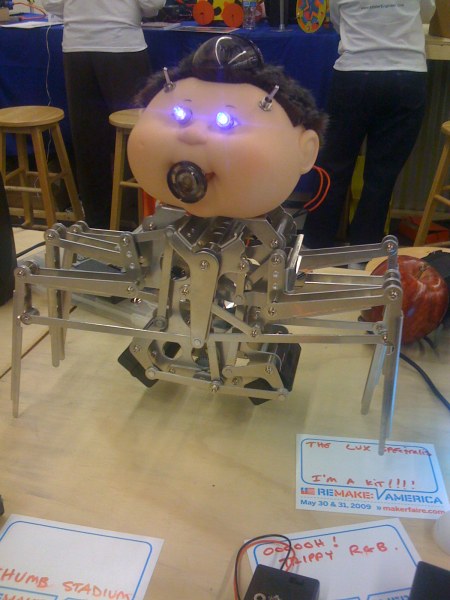
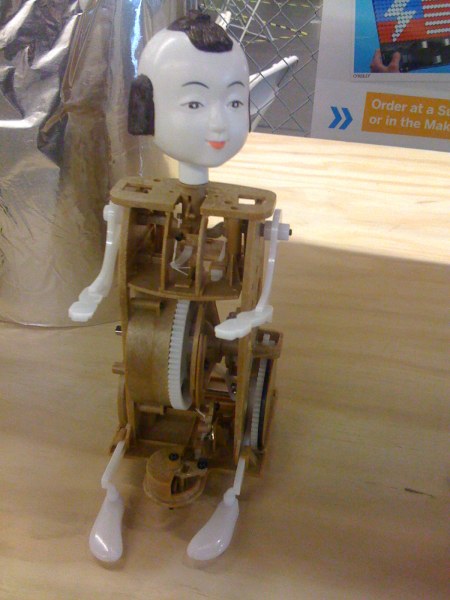
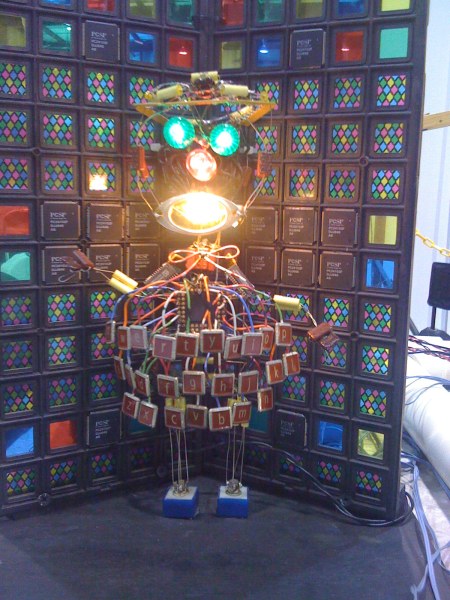
One day I will get to the Maker Faire and witness delights like these in person!

















 SheWalksSoftly