
Just some favorite Easter images from around the Web…




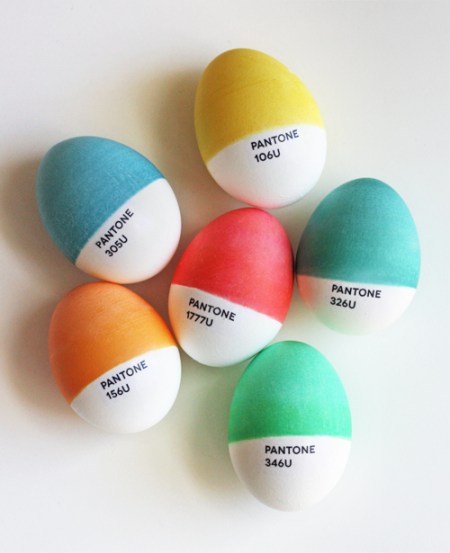


Happy Easter!
Just some favorite Easter images from around the Web…
Happy Easter!
Are you ready to have your mind blown by the most insanely elaborate handmade musical apparatus you’ve ever seen? Seriously…don’t miss this video.
According to the source:
The machine, made by Martin Molin, uses an elaborate marble track system to create a sophisticated song. There are some 2000 marbles raised by a tracked elevator which is powered by some vigorous hand cranking. As they descend, the marbles strike the right parts of a glockenspiel, percussion instruments, and bass guitar. A lever system allows the operator/musician to turn selected instruments on and off. This allows the machine to be played in a way that goes beyond simply turning the crank and allowing the programmed track to run.
Carol Milne has been knitting since she was 10 years old. She has a degree in Landscaping Architecture, and developed a technique involving wax casting, mold-making, and kiln-casting that has the appearance of perfectly “knit” glass.

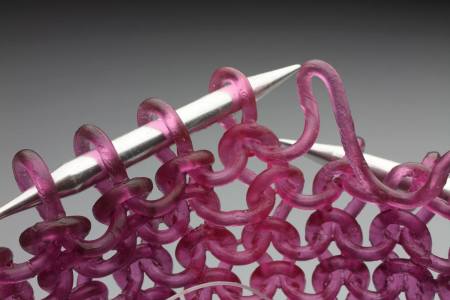
I wish I could get one of these as a tribute my grandmother, who was always knitting. So cool…
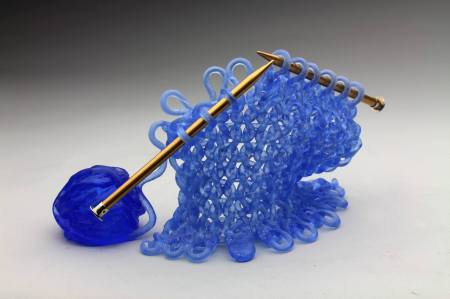


Although James Ensor (1860-1949) is most well known for his paintings (Which have influenced both expressionism and surrealism), I’ve been seeing his handmade masks pop up on Pinterest.

Not for the maskaphobics out there, these projects gave Ensor saw an opportunity beyond fine art. According To MOMA, he stated “The mask means to me: freshness of color, sumptuous decoration, wild unexpected gestures, very shrill expressions, exquisite turbulence.”
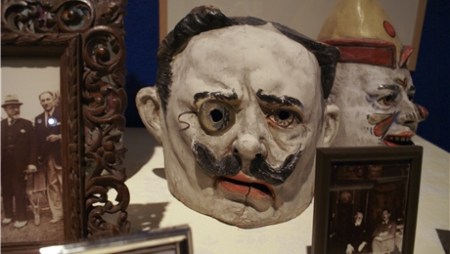
I love the phrase “exquisite turbulence.” But I’m not a fan of actual exquisite turbulence.
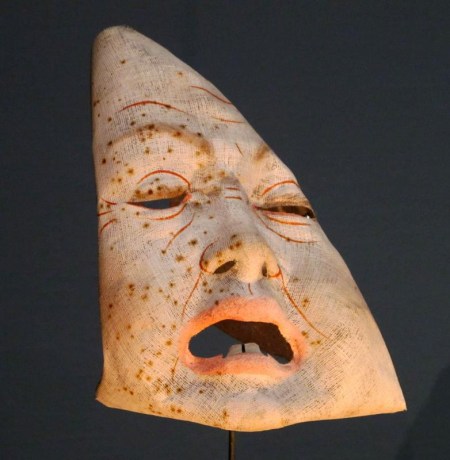
It’s been theorized that these masks were modeled after items in the curiosity shop Ensor’s family ran, right beneath his studio.
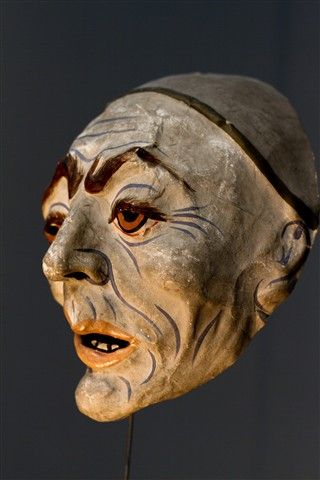
Quite evocative, no?

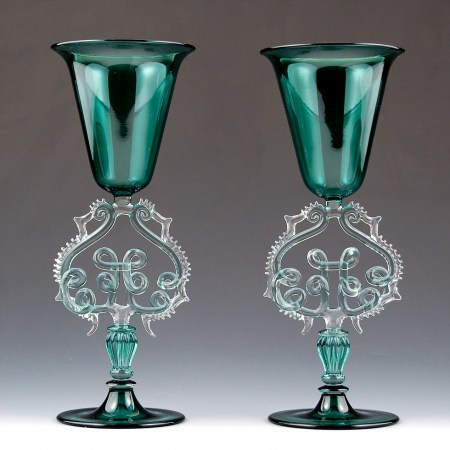
Kiva Ford has a degree in Scientific glassblowing. His work with intricate scientific instruments evolved into gorgeous creative sculpture.

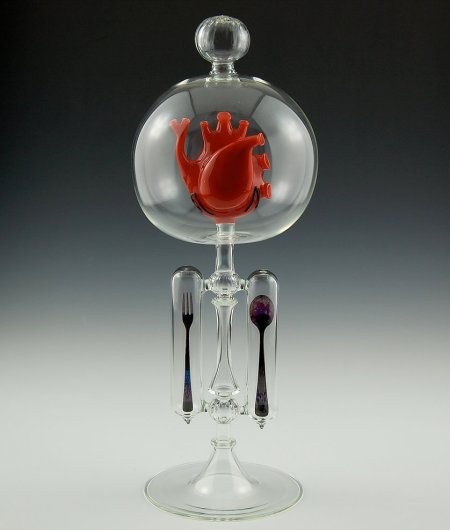
Clearly, he’s influenced by scientific subject matter, but brings skillful artistic sensibilities to each piece.
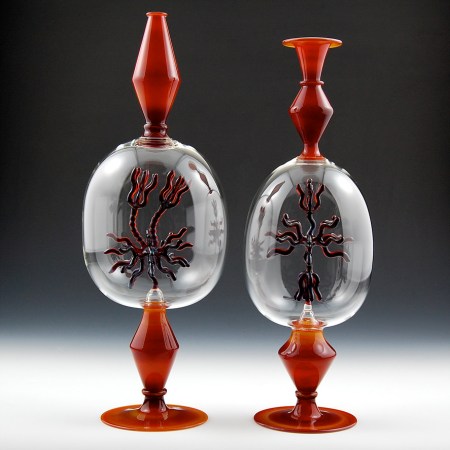
While some creations are purely decorative, others are gorgeous functional glassware (though I’d be terrified to drop them!)


This is Colossal posted an incredible new installation by artist-activist Courtney Mattison. It’s part of her Our Changing Seas series, on display at the Virginia Museum of Contemporary Art through April 17, 2016.

Each sculpture is inspired by sites identified by her hero, marine biologist Sylvia Earl (isn’t it wonderful to see someone list a marine biologist as a hero? There are so many unsung scientists and healers out there!).
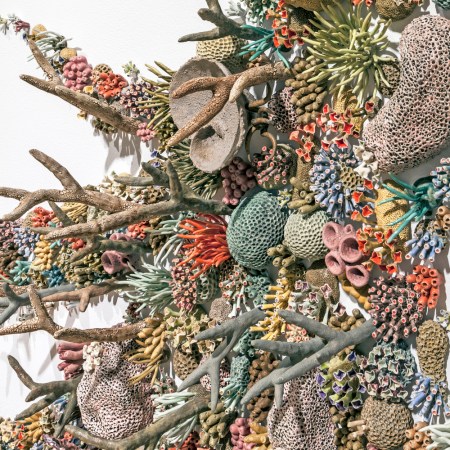
Her pieces are designed to bring awareness to what will happen to marine life as tropical sea temperatures rise and creatures are forced to migrate.

Mattison loves coral reefs because they are “exotic, diverse and often venomous” (sounds like a perfect femme fatale). Who wouldn’t love and want to preserve our world’s beautiful ocean friends?

Anya Boz has a series of faux taxidermy creations she calls Room Guardians,” and my very favorite one is the Persian cat. This is the kind of room guardian I would want…one that seems to snarkily quip “REALLY? You actually think you’re coming in here without permission?”

It’s posable, so you can arrange it in any number of positions to express its reaction to the unmitigated gall of others.

UNMITIGATED GALL, I tell you!

What is this cat saying to you?
Bovey Lee creates dizzying rice paper cutouts filled with topsy turvy twirls and turns.

She has a great artist statement:
My hand cut paper explores the tension between man and the environment in the context of power, sacrifice, and survival. These three “motivators,” as I call them, drive all our desires and behaviors toward one another and the environment.

We live in a time when we overdo everything from technology to urbanization to consumption. My recent work is informed by our precarious relationship with nature in the twenty-first century, i.e., what we do to the environment with our super machines and technologies and what nature does back to us in reaction.
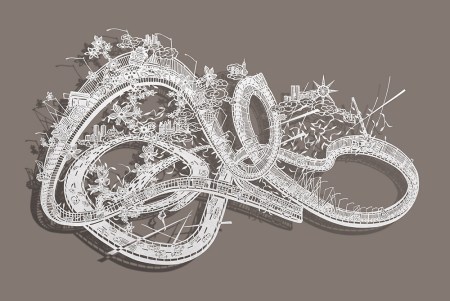
We live in a time when we overdo everything from technology to urbanization to consumption. My recent work is informed by our precarious relationship with nature in the twenty-first century, i.e., what we do to the environment with our super machines and technologies and what nature does back to us in reaction.

“Wellcome Book Prize, the annual £30,000 prize for literature that engages with the human experience of medicine and medical science, has unveiled this year’s winner trophy: a bespoke creation inspired by the nerve cells of the mind, from London-based artist, Kyle Bean.”

I’m amazed by the piece, particularly because it was not made from painstaking, intricate carvings or laser cutting…but by injecting a clear acrylic block with a 5 million volt particle accelerator to create what is essentially a fossil of electricity.
German physicist Christoph Lichtenberg discovered the technique circa 1777 when he succeeded in making branching electric discharges appear on the interior of an insulating material.
Best. Trophy. Ever.
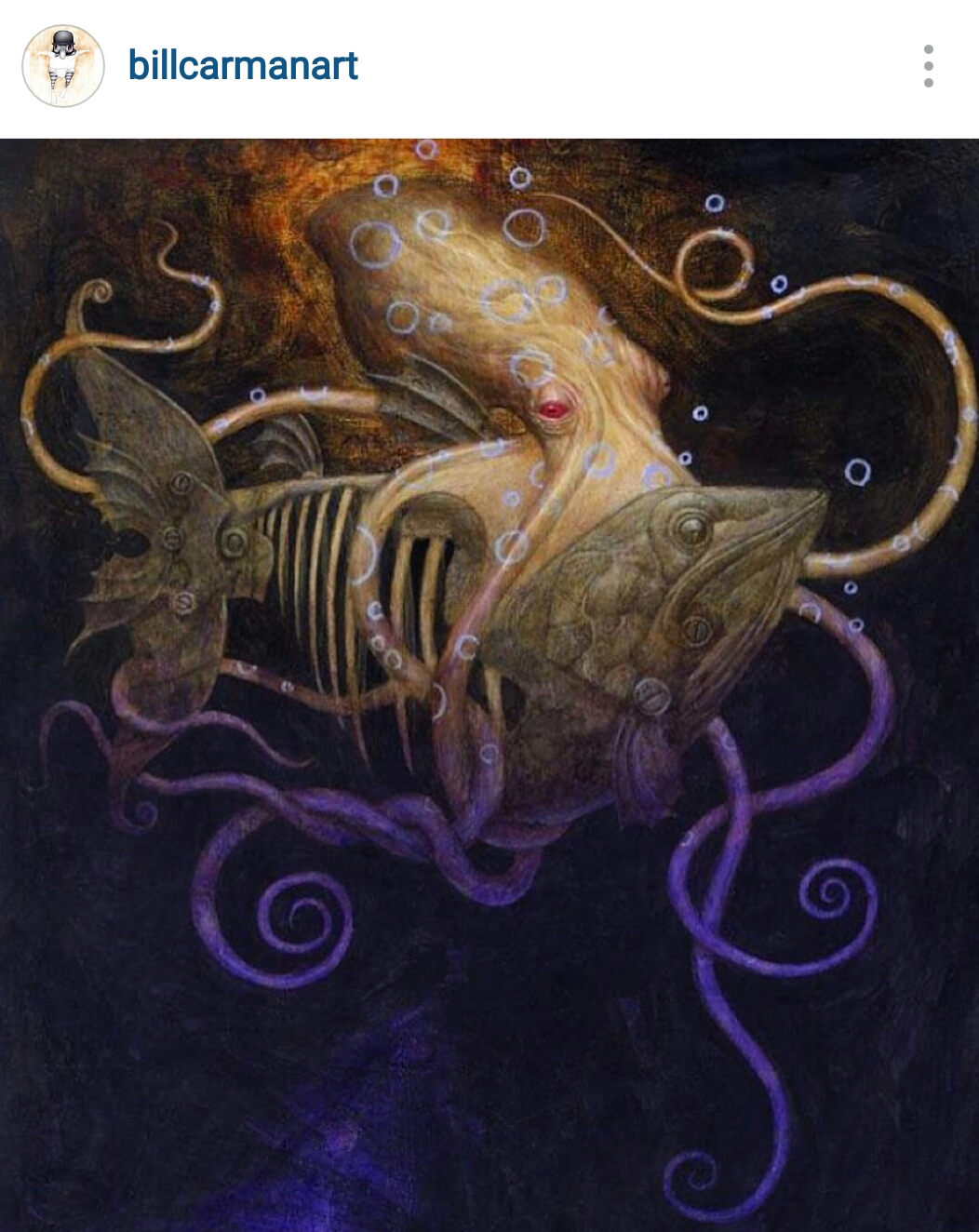


 SheWalksSoftly