
I’m quite entertained by the name of this exhibit. Especially given the classic connotations of the term.
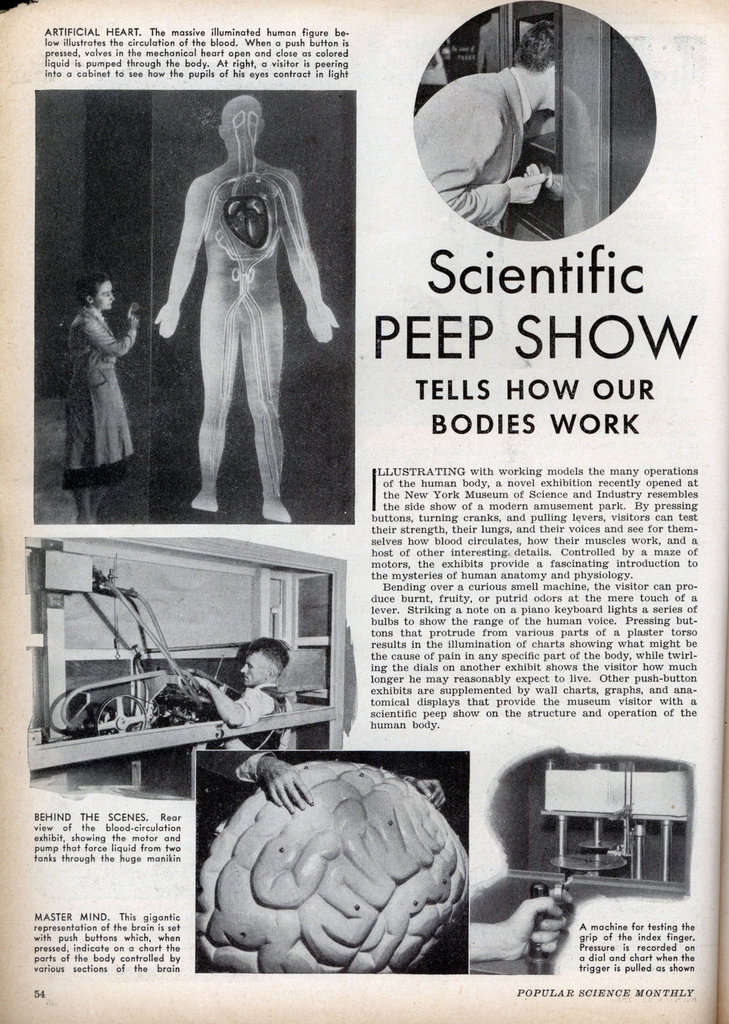
View full size and more at Modern Mechanix.
I’m quite entertained by the name of this exhibit. Especially given the classic connotations of the term.
View full size and more at Modern Mechanix.
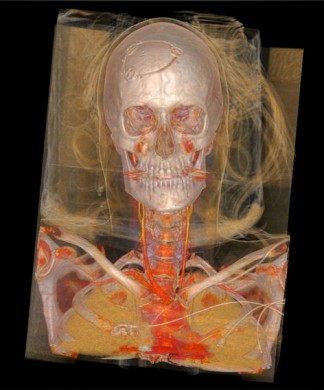
The Lennart Nilsson Award recognizes Extraordinary Image Makers in Science who use photographic representation as an explanatory medium.
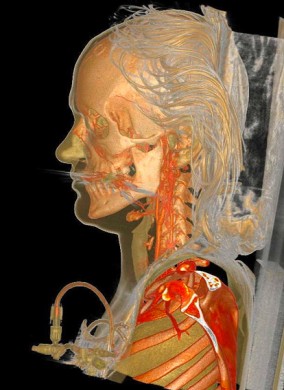
This year’s winner, Anders Persson masterfully combines technology and aesthetics in his post mortem “autopsy photographs.”
There are animal photos as well.
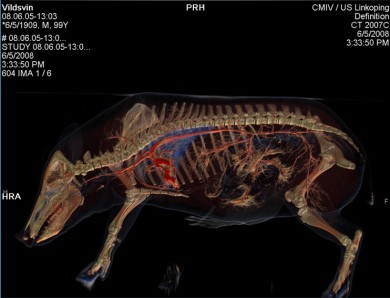
View the photo gallery.
Where do you turn for reliable knowledge on genetic anomalies? Why, this 1961 issue of Sexology magazine, of course!

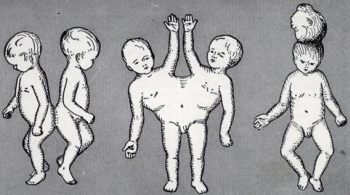
You can read the article on Modern Mechanix.
About Sexology magazine:
In the early 1930’s Hugo Gernsback introduced yet another magazine. This time the title and subject stunned the American reading public. SEXOLOGY, THE MAGAZINE OF SEX SCIENCE, sought to bring the results of modern science to a general public that had not yet crawled out from under the Victorian pseudo-moral posture of never speaking publicly about sex. A little implied prurience probably helped sell magazines, too.
If only they knew the extent of “prurience” the Internet (final wrecking ball to all things sacred) would bring.
I don’t come across nearly enough people who blend art and science. Colour Lovers recently had an interview with scientist/artist Alan Jaras in which he discusses, at length, his process in creating incredible photos of Bending Light.

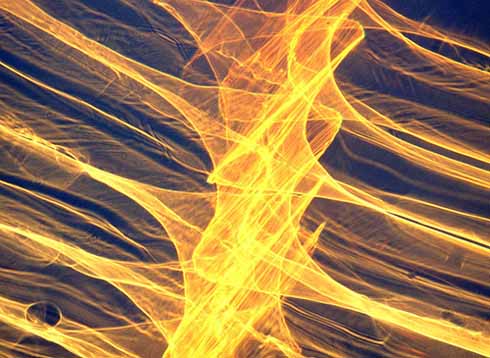
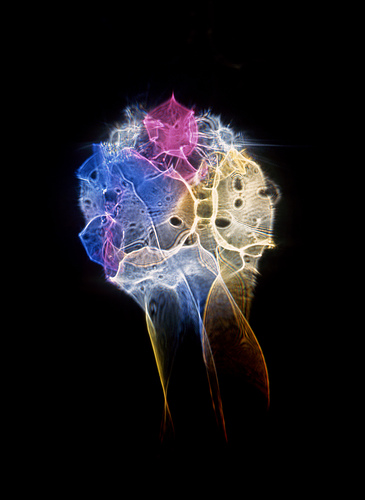
“Using only film, and without a lens on the camera, in what Alan says could still be described as a photogram, he shoots a targeted light source through and a piece of art glass or formed plastic to capture the created refraction patterns. The results, what could be described as ‘images of strange microscopic or deep sea creatures or even galaxies forming in deep space,’ pull at the viewers perception of digital and analog, art and science, all the while expanding our imaginations and understanding of the world around us.”
Flickr (with many other great sets)
I believe I had a Visible Woman Model Kit as a toddler, but was far too young to appreciate just how awesome it was.

They are still sold, and the model has gone surprisingly unchanged for the past 40 years.

The models are intriguing to look at, though I can imagine young children would be rather put off by them.
There is a small gallery of Visible Model Kits through the years here.
One of my all time favorite blogs, Bioephemera, dug up this little treat. The Surgical Suture Sampler.
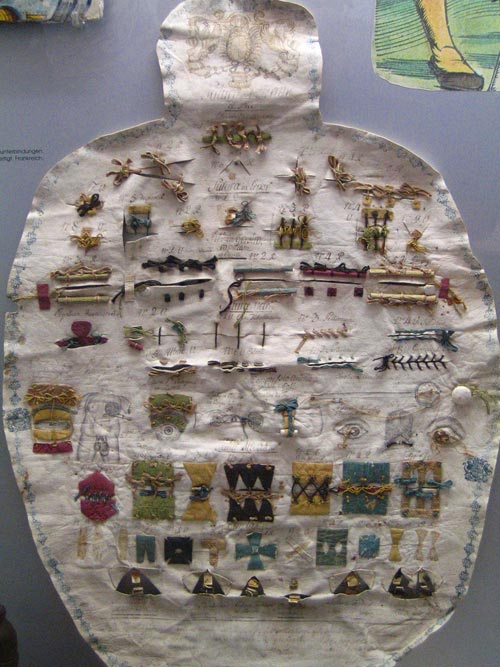
Though surgery is still a harrowing experience, I’m certainly thankful for the advancements we’ve made since the creation of this sampler.
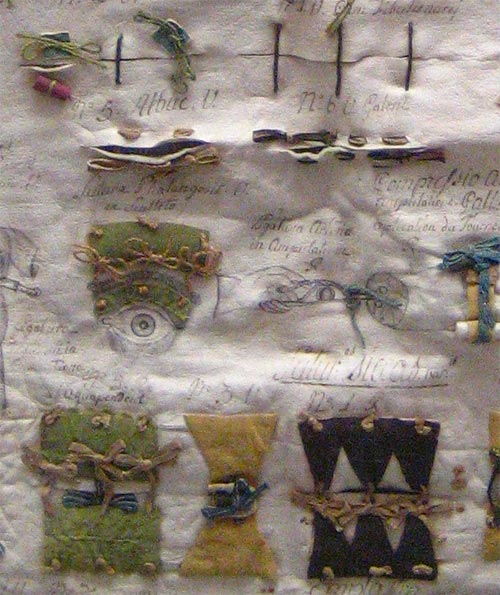
The likeness to a craft tutorial is mildly unnerving. Perhaps the surgical patients of yesteryear left the hospital resembling colorful decorative quilts.
Colour Lovers just had a great post about the Colors of Bacteria, Fungi and More.
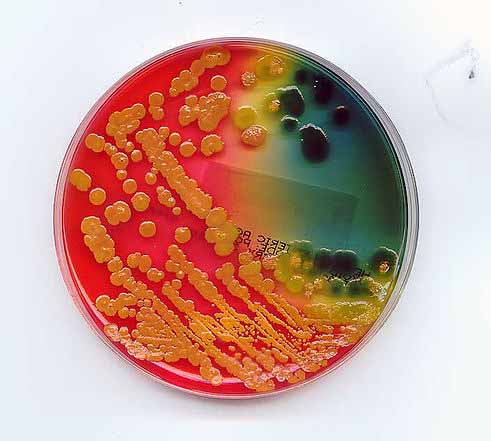
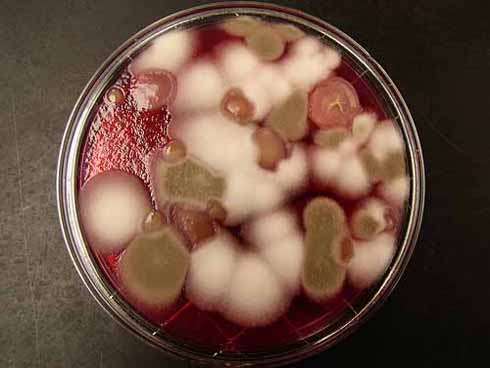
Some of the brilliant colors come from image enhancement, but many are produced by the microorganism’s natural absorption of light at different wavelengths. Some of the growth mediums also add a chromatic boost.
Nature will often paint a pretty picture in the ugliest of places.
I don’t get out much, therefore the existence of Hasbro’s The Littlest Pet Shop had thus far escaped me. Last night my wonderful friend Louisa left this in my mailbox:

Now I’m at the mercy of my own biology, reluctantly infatuated with these creatures who manage to exploit maternal instinct to the hilt. I KNOW I’m being manipulated, hypnotized by their big shiny eyes and wobbly heads…yet I can’t look away. I went so far as to seek Flickr pools.
Someone may be getting dragged to the toy store this weekend.
Animators and designers must possess a bit of scientific savvy these days, considering the ways in which the human brain responds to certain physical characteristics. NY times article highlights:
The greater the number of cute cues that an animal or object happens to possess, or the more exaggerated the signals may be, the louder and more italicized are the squeals provoked.
Cuteness is distinct from beauty, researchers say, emphasizing rounded over sculptured, soft over refined, clumsy over quick. Beauty attracts admiration and demands a pedestal; cuteness attracts affection and demands a lap. Beauty is rare and brutal, despoiled by a single pimple. Cuteness is commonplace and generous, content on occasion to cosegregate with homeliness.
Human babies have unusually large heads because humans have unusually large brains. Their heads are round because their brains continue to grow throughout the first months of life, and the plates of the skull stay flexible and unfused to accommodate the development. Baby eyes and ears are situated comparatively far down the face and skull, and only later migrate upward in proportion to the development of bones in the cheek and jaw areas. The cartilage tissue in an infant’s nose is comparatively soft and undeveloped, which is why most babies have button noses. Baby skin sits relatively loose on the body, rather than being taut, the better to stretch for growth spurts to come; that lax packaging accentuates the overall roundness of form.
As John K. has pointed out in his incredible blog, this formula is nothing new:

I’m excited to see this concept translate into robot animation. Can anyone resist this face? If so, report for psychiatric evaluation immediately.
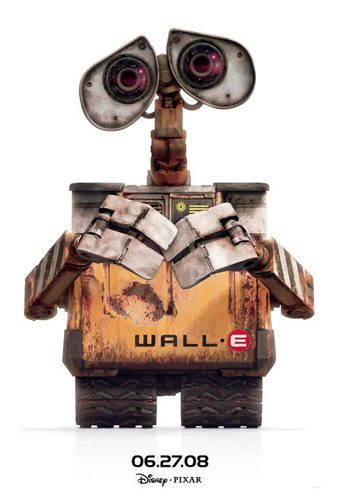
Yep, this fellow actually makes me want to see a Disney Pixar film for the first time in…in…years? Resistance to *The Cute* is futile…at least for me.
This pair is finally giving bacteria proper credit as virtuosos of the art world. So often we find that nature conjures up colors, designs, patterns and visions beyond the capability of human hands. The following is a very simplified example of bacteria left to their own devices on film negatives:

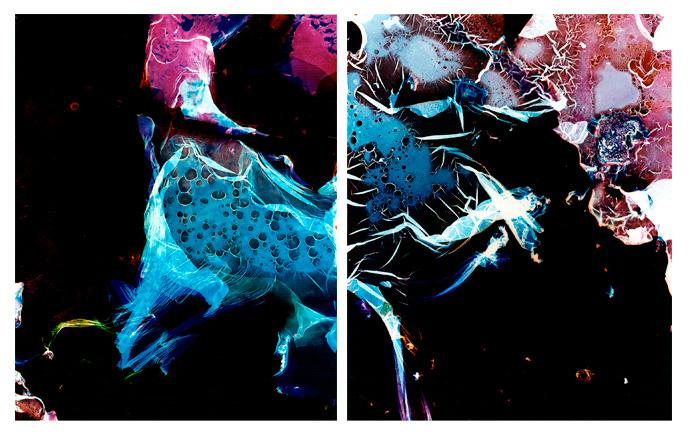
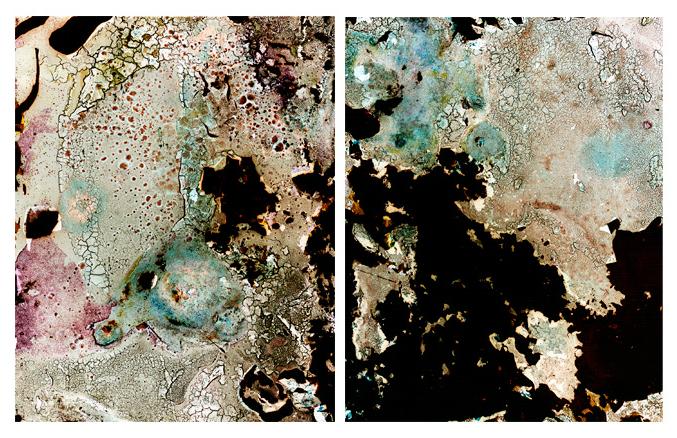
(Abridged) artist statement:
The artist has gathered bacteria samples from his own body. The bacterium destroys the film surface producing photographic images that are created by chance. The artist is removed from the process but, still at the same time, they are a product of the artist’s body.
The closest reference to Bacteriograms is the Rorschach inkblot test with black ink on white paper, in which only individual’s perception and psyche dictate the representation of the image, and therefore is supposed to reveal something about the viewer’s subconscious.
Bacteriograms are not even showing the bacterium that was used in the process to create them; they are merely showing traces of bacterial activity. These images are just a piece of degraded and therefore deconstructed film.
These pictures remind me of the mesmerizing film Decasia: The State of Decay in which director Bill Morrisson assembles a collage of film footage collected from deteriorating archives, and completes it with a detuned, decaying soundtrack. (Thanks to Ron for introducing me to this).
 SheWalksSoftly
