
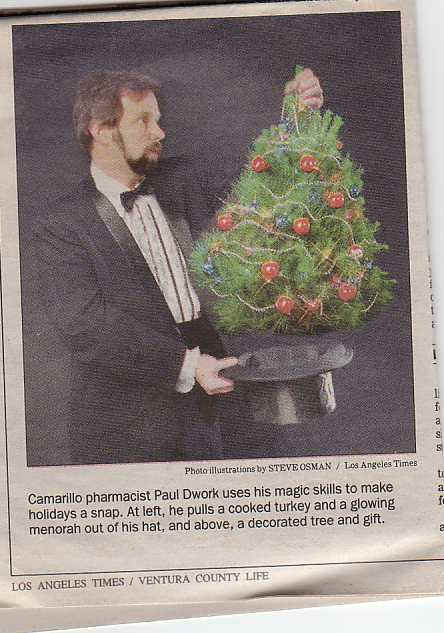
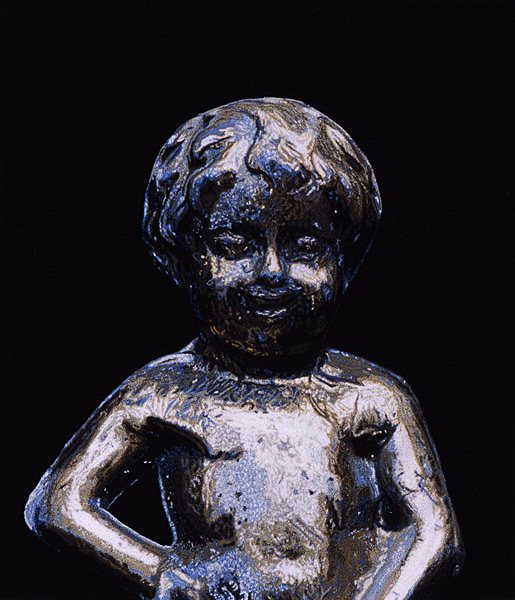
And my personal favorite (search no further for your Xmas tree, friends!):

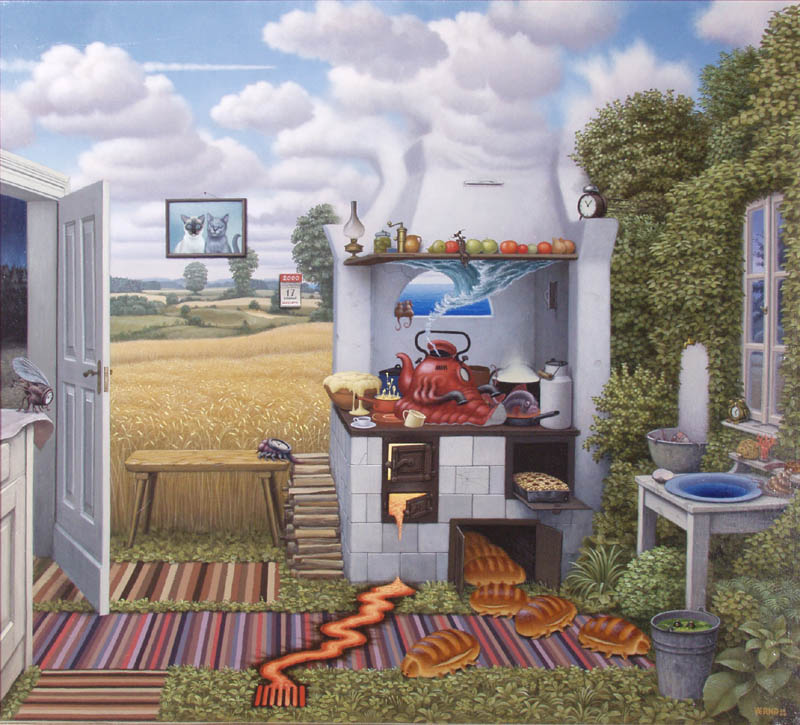
The search was inspired by this io9 post about the differences between science and magic, and how the two have been blended in modern sci-fi.
My opinion on the science .v. magic question is most closely aligned with Ted Chiang’s statement in the article:
Roughly speaking, if you can mass-produce it, it’s science, and if you can’t, it’s magic. As an example, suppose someone says she can transform lead into gold. If we can use her technique to build factories that turn lead into gold by the ton, then she’s made an incredible scientific discovery. If on the other hand it’s something that only she can do, and only under special conditions, then she’s a magician. And I don’t mean that she’s a charlatan; she might actually be able to transform lead into gold. But scientific phenomena are reproducible by other investigators; they aren’t dependent on a specific person.
And my favorite quote: Magic is when the universe responds to you in a personal way.
A good portion of the science I’ll be using in my Behavioral Medicine practice was once cast off as mysticism. The difference? We’ve developed machines to “prove” and display these mystical concepts. Even as a calculating and logical human being, it always seemed arrogant that we tend to award credit ONLY to that which we can measure on our own instruments.







 SheWalksSoftly


