
This is by far my favorite image by Alex Dukal.
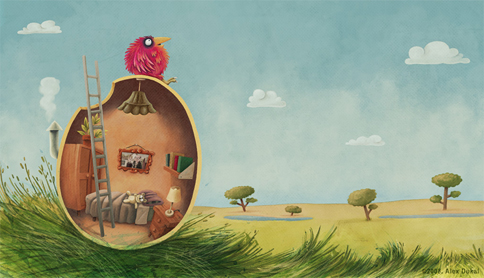
I absolutely love the combination of wide-eyed wonder and abject fear on the bird’s face as it surveys the world outside of it’s delightfully cozy egg.
We all love our comfort zones.
This is by far my favorite image by Alex Dukal.
I absolutely love the combination of wide-eyed wonder and abject fear on the bird’s face as it surveys the world outside of it’s delightfully cozy egg.
We all love our comfort zones.
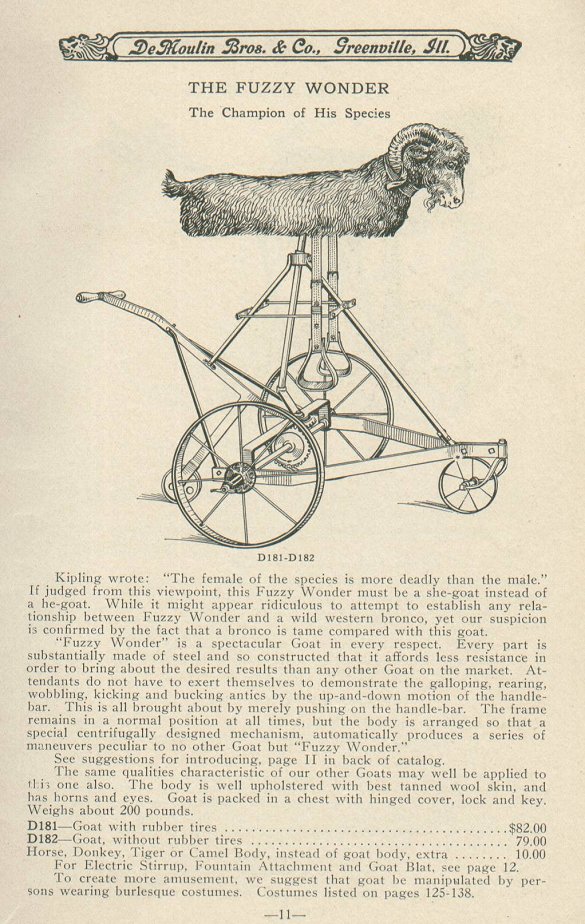
(click for full size…you don’t want to miss the text)
I have no idea where this comes from, or why someone thought it would be a good idea to market an oddly bisected goat placed atop what looks like some terribly inefficient machinery (though they suggest its use in burlesque performances).
In case the diagram fails to convey the unparalleled fierceness of the animal, the ad states that “a wild western bronco is tame compared to this goat.”
For a mere $10 extra, you can substitute a horse, donkey, tiger or camel body.
Fragile Candy is apparently designed to resemble broken glass, in order to remind us that although candy is delicious…it’s bad for you.

Please.
I would attack a piece of good candy like a gladiator if I had to (armor and all). I don’t even like plain lollipops, but at first glance my brain inadvertently and automatically devised about 30 different ways to avoid the sharp edges.
This image search was inspired by MoMa’s current exhibit Wunderkammer: A Century of Curiosities. I truly hope I can make it to MoMa before the show closes.
Vintage:
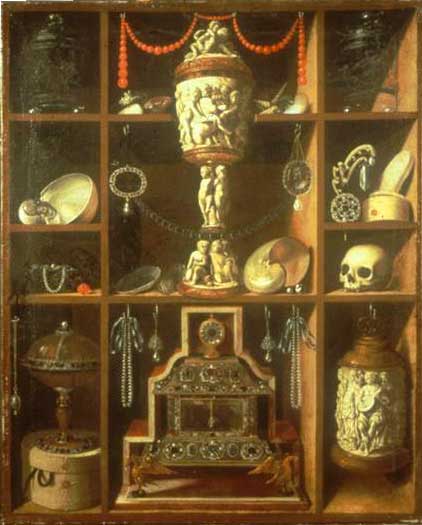
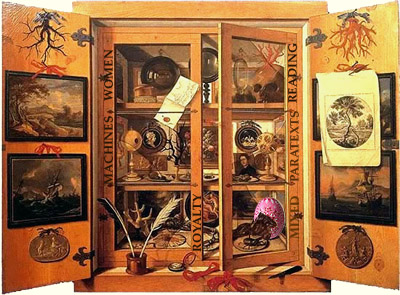
And some modern takes on the subject:
Rust, dust and dolls…

Cabinet of Sculptural Crochet!
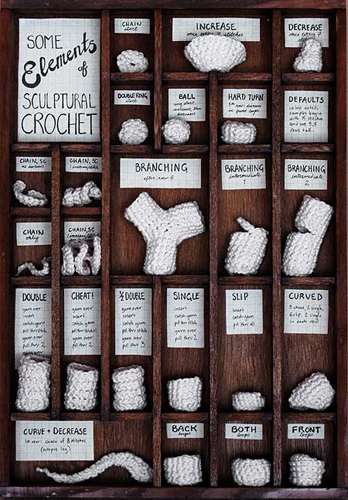
I never realized that years before I knew what the word Wunderkammer meant, I was quite busy cultivating one of my own in the form of a very eclectic toy shelf (now packed with oddities of all types).
Traditionally…
Cabinets of curiosities (also known as Wunderkammer, Cabinets of Wonder, or wonder-rooms) were encyclopedic collections of types of objects whose categorical boundaries were, in Renaissance Europe, yet to be defined. Modern science would categorize the objects included as belonging to natural history (sometimes faked), geology, ethnography, archaeology, religious or historical relics, works of art (including cabinet paintings) and antiquities. -Wiki
Many of my hopeful travel destinations revolve around where I can find some of the best “Cabinets” in the world. I love the aesthetic of encased organized chaos.
I’d like to create some mini cabinets of curiosities to give away. They would make stellar gifts for about .00125% of the population.
 SheWalksSoftly